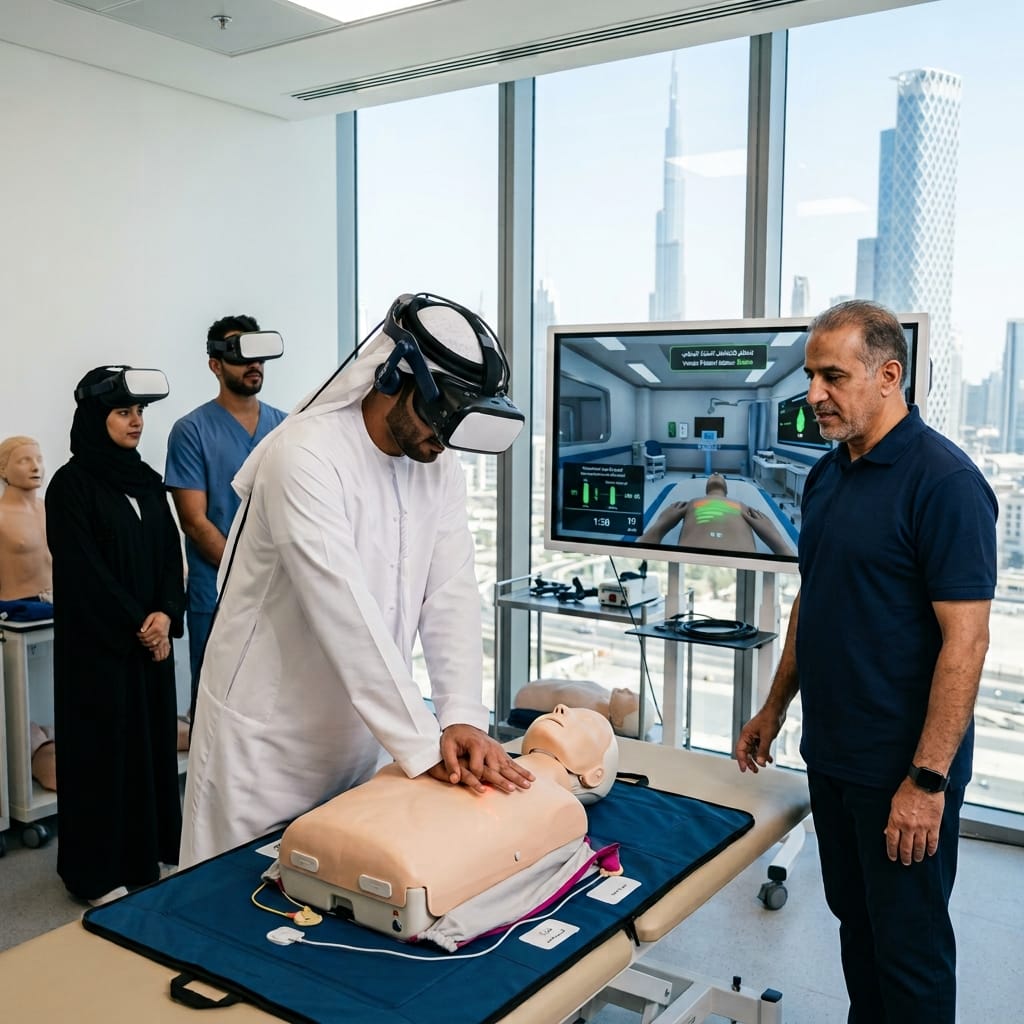

If you’ve ever stood on the Corniche and looked out at Abu Dhabi’s skyline, you’ve seen mechanical engineering at work – in the HVAC systems keeping towers cool, the desalination plants supplying fresh water, and the energy infrastructure powering a rapidly growing economy. It’s no surprise, then, that Mechanical Engineering Courses in Abu Dhabi have become one of the most searched-for professional development paths in the UAE. Whether you’re a fresh graduate trying to land your first role or a mid-career engineer looking to specialize, the right course can be the difference between staying stuck and moving forward.
Why Mechanical Engineering Skills Are in Demand Right Now
Engineering talent shortages aren’t just a UAE story – they’re global. According to the American Society of Mechanical Engineers (ASME), a not-for-profit professional organization founded in 1880, demand for engineering skills in the U.S. alone is projected to grow steadily even as roughly a third of open engineering positions go unfilled each year, largely due to a gap between employer needs and available talent (asme.org). ASME’s own workforce research also points to a shift in what employers actually want: advanced CAD and digital design tools now show up in a large majority of engineering job postings, and employers are increasingly hunting for engineers comfortable with robotics, automation, and AI-integrated design workflows (asme.org).
The UAE mirrors this trend closely. Job listings across the country consistently call for mechanical engineers with hands-on HVAC, MEP, and manufacturing experience – and increasingly, familiarity with modern design and simulation software. That’s exactly the gap that structured, practical Mechanical Engineering Courses in Abu Dhabi are designed to close.
What Makes a Course Worth Your Time?
Not every course delivers real career advancement that mechanical engineering UAE professionals actually need. Before enrolling, check for:
- Industry-aligned curriculum – CAD/CAM, SolidWorks, AutoCAD, thermodynamics, and simulation tools that mirror what employers ask for.
- Certified instructors with real project experience, not just theoretical teaching backgrounds.
- Recognized certification that holds weight with UAE employers and international bodies alike.
- Flexible formats – evening classes, weekend batches, or online modules for working professionals.
- Career support – resume guidance, interview prep, and employer connections.
A Simple Roadmap to Choosing Your Course
Here’s a visual way to think about the decision-making process:
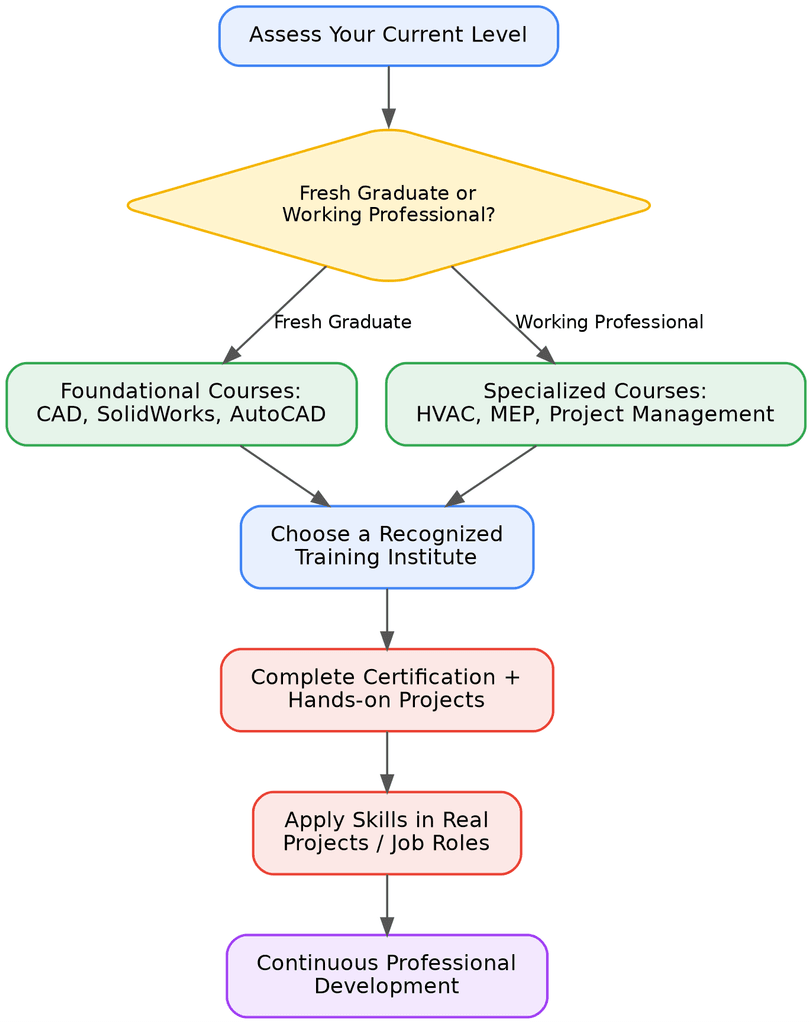
This roadmap reflects a principle ASME’s Vision 2030 research also emphasizes: practice-based, hands-on engineering experience – not just classroom theory – is what actually prepares engineers for the workforce (asme.org).
Top Universities and Institutes for Mechanical Engineering in Abu Dhabi
When people search for top universities mechanical engineering Abu Dhabi, they’re usually choosing between two tracks: full academic degree programs and shorter, skills-focused professional certifications.
- Degree-focused institutions in Abu Dhabi offer four-year Bachelor’s programs in mechanical engineering, often accredited internationally, and are the right fit if you’re starting from scratch or want a formal engineering degree.
- Skills-based training providers, like iskills.ae, focus on practical, certification-driven courses – CAD software, thermodynamics applications, HVAC design, and other in-demand technical skills – built for people who want to upskill quickly without committing to a multi-year degree. This route is especially popular among engineers already in the workforce who need a credential fast, or graduates who want hands-on software fluency that universities don’t always prioritize.
Both paths matter. A degree builds the theoretical foundation; targeted training builds the practical, tool-specific competence employers actually test for in interviews.
Professional Development Doesn’t Stop After Graduation
One mistake many engineers make is assuming learning ends once they land a job. Professional development in mechanical engineering in the Middle East is an ongoing process – new software versions, updated design codes, and emerging technologies like AI-assisted simulation mean the field keeps moving. Organizations such as the U.S.-based National Society of Professional Engineers nspe.org highlight continuing education as a core part of maintaining engineering competency and licensure throughout a career, a principle that applies just as much to engineers building their careers in the UAE.
Short courses, certification renewals, and workshops in specialized areas (robotics, renewable energy systems, advanced manufacturing) keep your resume current and your skills sharp – especially in a market as competitive as Abu Dhabi’s.
Moving Forward in Your Engineering Career
Abu Dhabi’s engineering job market rewards people who invest in themselves. Whether you choose a full university degree or a focused, practical program, the goal is the same: build skills employers are actively searching for. If you’re ready to take that next step, exploring hands-on, industry-relevant Mechanical Engineering Courses in Abu Dhabi – like those offered by skills – is a solid place to start turning career goals into real progress. Contact Us to explore course schedules or speak with an advisor about the right learning path for your career goals