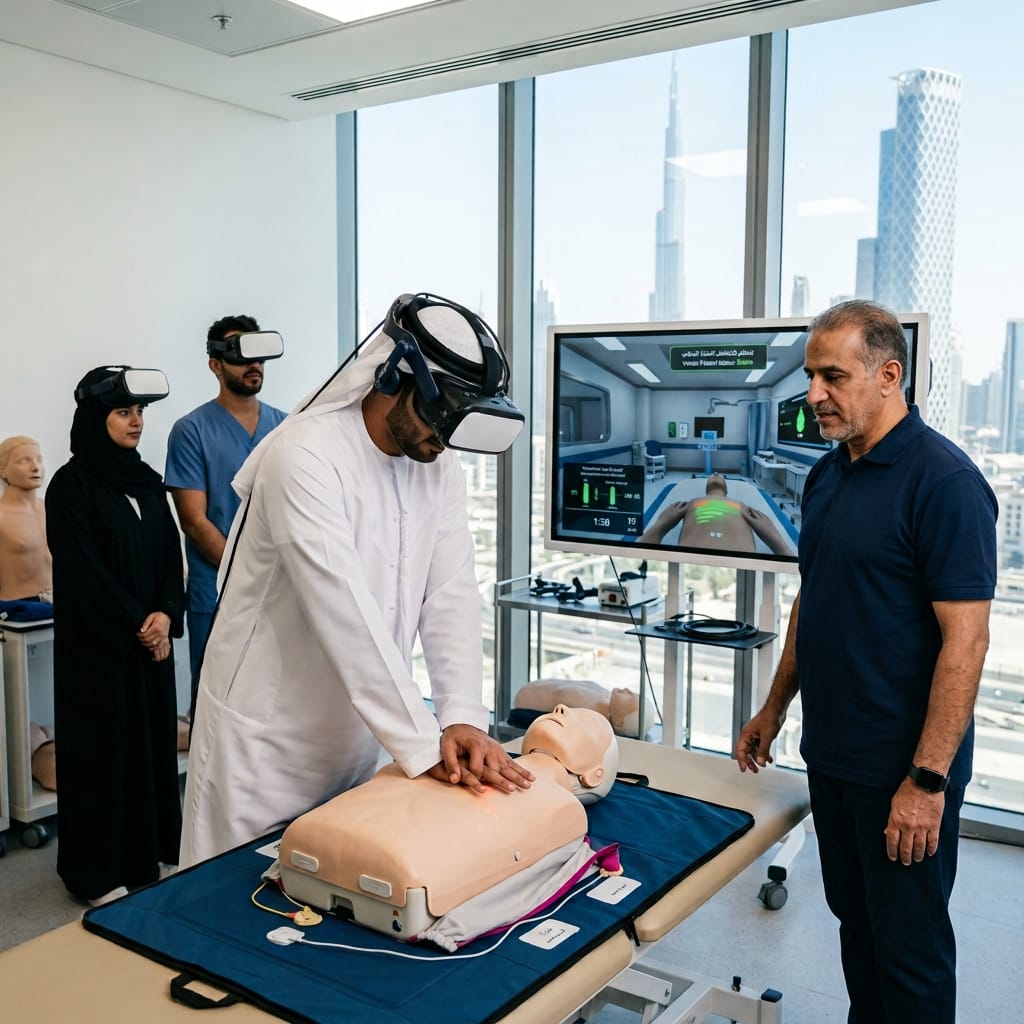

Every building, plant, and substation in Abu Dhabi depends on something most people never think about – the switchgear quietly distributing power behind a locked panel door. When it works, nobody notices. When it fails, the consequences range from costly downtime to serious safety incidents. That’s why electrical engineers across the UAE are increasingly enrolling in a Testing & Maintenance of High Voltage Switchgear Course, and why many pair it with a High Voltage Switchgear Operation & Maintenance Course to round out their skill set. This guide breaks down what these courses actually cover, why they matter, and how to choose the right training provider.
Why Switchgear Testing & Maintenance Skills Are Non-Negotiable
Switchgear isn’t a “set it and forget it” component. Contacts wear, insulation degrades, and protective relays drift out of calibration over years of operation – all invisible until something goes wrong. That’s why organizations like the National Fire Protection Association (NFPA), a U.S.-based nonprofit that develops widely referenced electrical safety standards, treat structured maintenance as essential rather than optional. NFPA 70B – the Standard for Electrical Equipment Maintenance – moved from being a set of recommendations to mandatory requirements in 2023, specifically because unmaintained equipment poses real risks to people, property, and processes (nfpa.org). The standard explicitly covers testing and maintenance practices for switchgear, distribution panels, circuit breakers, and related equipment, with maintenance frequency tied to each asset’s condition and criticality nfpa.org.
For Abu Dhabi engineers working across power utilities, oil & gas, and commercial facilities, this global shift toward condition-based, mandatory maintenance is exactly why structured training now matters more than ever.
What a High Voltage Switchgear Course Actually Covers
A well-built high-voltage switchgear testing and maintenance course for Abu Dhabi engineers in 2026 should walk through the full maintenance lifecycle – not just theory. Here’s a typical workflow taught in a hands-on program:
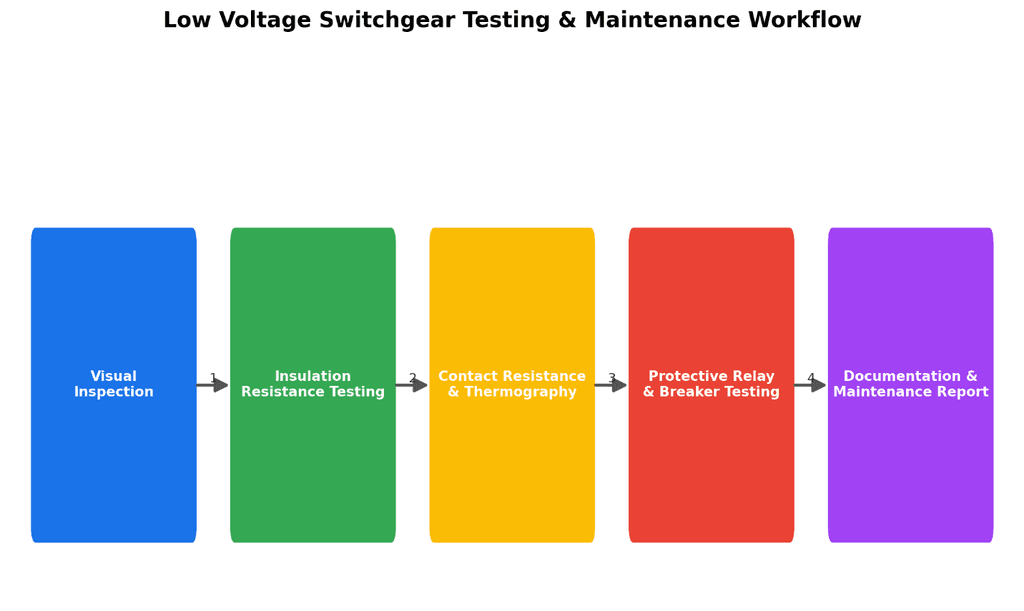
- Visual inspection – checking for corrosion, overheating signs, loose connections, and contamination.
- Insulation resistance testing – mugger testing to catch insulation breakdown before it causes a fault.
- Contact resistance & thermography – identifying hot spots and degraded contacts using infrared imaging.
- Protective relay & breaker testing – verifying trip settings and functional response under simulated fault conditions.
- Documentation & maintenance reporting – building the record trail that supports compliance and long-term asset planning.
LV Switchgear Training Program Curriculum Details
When comparing an LV switchgear training program Abu Dhabi electrical engineers curriculum details, look for coverage across these core areas:
- Switchgear fundamentals – construction, ratings, and application of LV switchgear assemblies.
- Testing procedures – insulation resistance, contact resistance, primary/secondary injection testing.
- Protective device coordination – relay settings, breaker trip curves, and selectivity studies.
- Preventive maintenance planning – scheduling maintenance based on equipment condition and criticality, in line with modern standards like NFPA 70B.
- Safety procedures – lockout-tag out, arc flash awareness, and PPE requirements specific to LV switchgear work.
- Hands-on lab or simulation time – theory alone doesn’t build real testing competence.
From LV to HV: Why Engineers Often Take Both Courses
Many engineers don’t stop at High voltage. A High Voltage Switchgear Operation & Maintenance Course builds on the same testing philosophy – insulation checks, contact resistance, protective relay verification – but applies it to higher-risk HV assemblies, switching sequences, and substation-level operations. Engineers working across utility, industrial, or large commercial facilities often pursue both courses together, since LV and HV systems frequently sit side by side in the same facility and require overlapping – though not identical – competencies.
What Makes a Course worth Recommending?
If you’re checking best high-voltage switchgear maintenance certification Abu Dhabi engineer reviews, the strongest programs consistently share a few traits: instructors with real field-testing experience (not just classroom backgrounds), access to actual switchgear equipment or realistic simulators, up-to-date content aligned with current international standards, and a certificate that’s recognized by employers – not just a completion slip.
Essential Skills Abu Dhabi Engineers Should Walk Away With
By the end of a strong program, Abu Dhabi engineers’ essential skills in high-voltage switchgear testing courses 2026 should include: confident, independent execution of insulation and contact resistance testing, the ability to interpret thermo graphic and test data correctly, familiarity with relay coordination principles, and – just as importantly – the judgment to know when equipment needs escalation to specialist repair versus routine servicing.
Building Real Competence, Not Just a Certificate
Switchgear testing and maintenance isn’t a box-ticking exercise – it’s a skill set that directly protects people, equipment, and uptime. Whether you’re starting with a low voltage course or building toward high voltage competence, choosing a program with genuine hands-on testing experience is what actually prepares you for the job, not just the exam. Contact Us