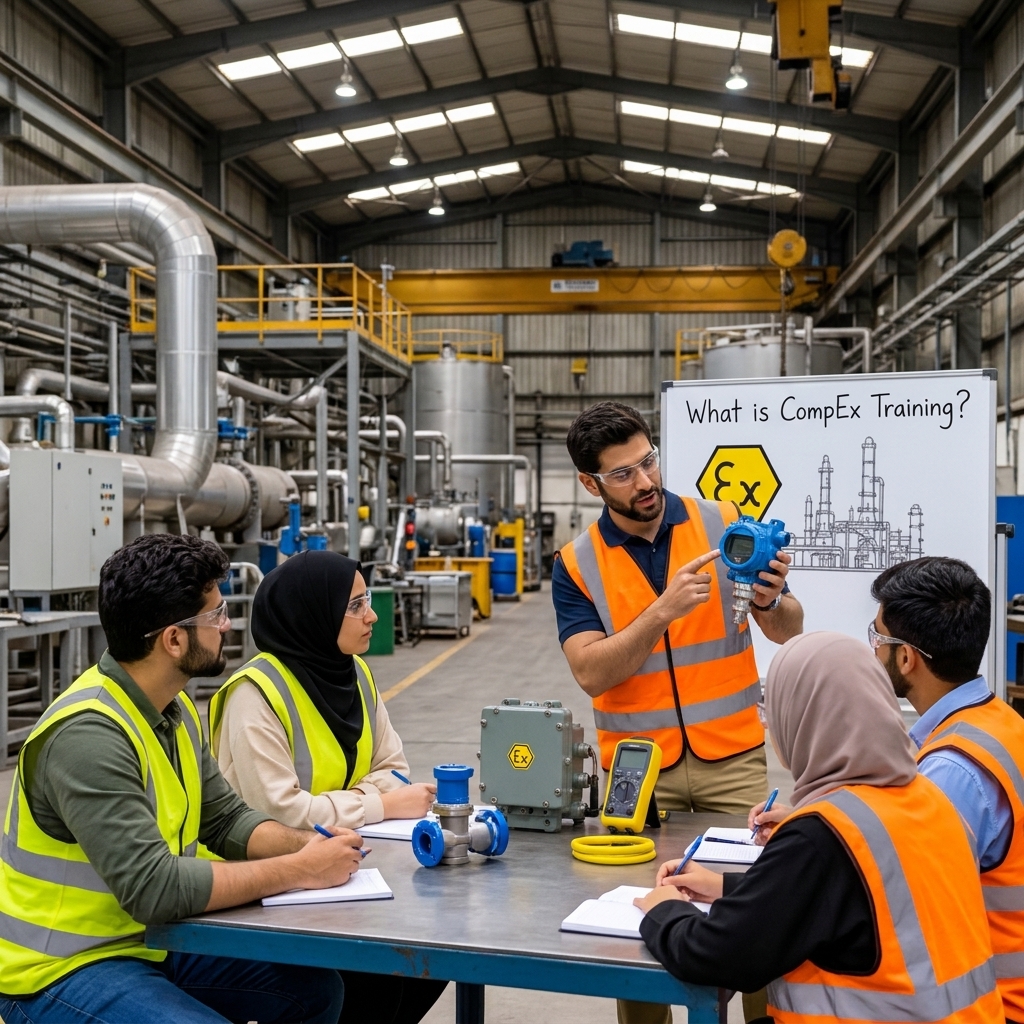

Walk into any refinery, and you will see warning signs about hazardous areas. Most people read them. Fewer can explain what they mean. This guide covers the CompEx Foundation Course, who should take it, and what you learn. You will also see how it differs from the technical CompEx modules.
What the CompEx Foundation Course is
The CompEx Foundation Course, known as ExF, introduces the basics of explosive atmospheres. It sits at the entry level of the CompEx scheme. CompEx stands for Competency for Hazardous Areas. ExF builds awareness. It does not qualify you to install or repair equipment. Those skills belong to the Ex01 to Ex04 modules. Think of it as groundwork. You learn the language, the risks, and the rules before anyone hands you a spanner.
What you learn
The syllabus stays broad on purpose. You find out how flammable gases, vapours, and dust create explosion risk. The course shows how sites divide hazardous areas into zones. It also introduces protection methods, equipment markings, and the IEC 60079 standard. Nobody expects you to memorise every detail. The goal is to spot a problem and know who to call.
Who should take it
The course suits people who work near hazardous areas but not on the equipment itself. Typical learners include:
- Site managers and supervisors
- Health and safety officers
- Procurement and stores staff
- Sales and technical support teams
- Contractors who visit oil and gas sites
- New starters in the energy sector
Electricians and instrument technicians usually skip ahead. They need Ex01 or a higher module.
How ExF differs from the technical modules
The Ex01 to Ex04 modules test practical skills, so candidates complete hands-on tasks. ExF focuses on knowledge. Expect a written assessment rather than practical work. Course length and exam format can vary by provider, so ask before you book.
How to get started
Here is a simple path from first question to certificate:
- Confirm that your role needs awareness, not technical certification.
- Find a provider that offers an approved ExF course.
- Ask about course length, dates, and exam format.
- Attend the sessions and ask plenty of questions.
- Sit the assessment.
- Keep your certificate and note any renewal date.
Why it matters in the UAE
The UAE runs on energy. Abu Dhabi, Dubai, and Sharjah host refineries, petrochemical plants, and fuel depots. Safety rules there are strict, and clients check them. Many employers want everyone on site to understand the basics, not only the technicians. A manager who knows what a Zone 1 area means asks better questions. A buyer who understands equipment markings avoids costly mistakes. Some learners treat ExF as a first step. They move on to Ex01 when their role changes.
Standards and further reading
For background on the global certification system, visit the IECEx website. The UK Health and Safety Executive publishes free guidance on explosive atmospheres. Both sites help you check what your employer expects.
Where to train
Look for experienced trainers and clear exam support. A good provider answers your questions before you pay. Infinity Skills UAE delivers practical technical training for working professionals. Browse current courses on the Infinity Skills UAE website.
Book your place
Not sure whether ExF or Ex01 fits your role? Contact Us . Ask about dates, fees, and group bookings for your site.