
COURSE OVERVIEW
Visually inspect an excavation site and prevent possible damage to the pipeline facility.
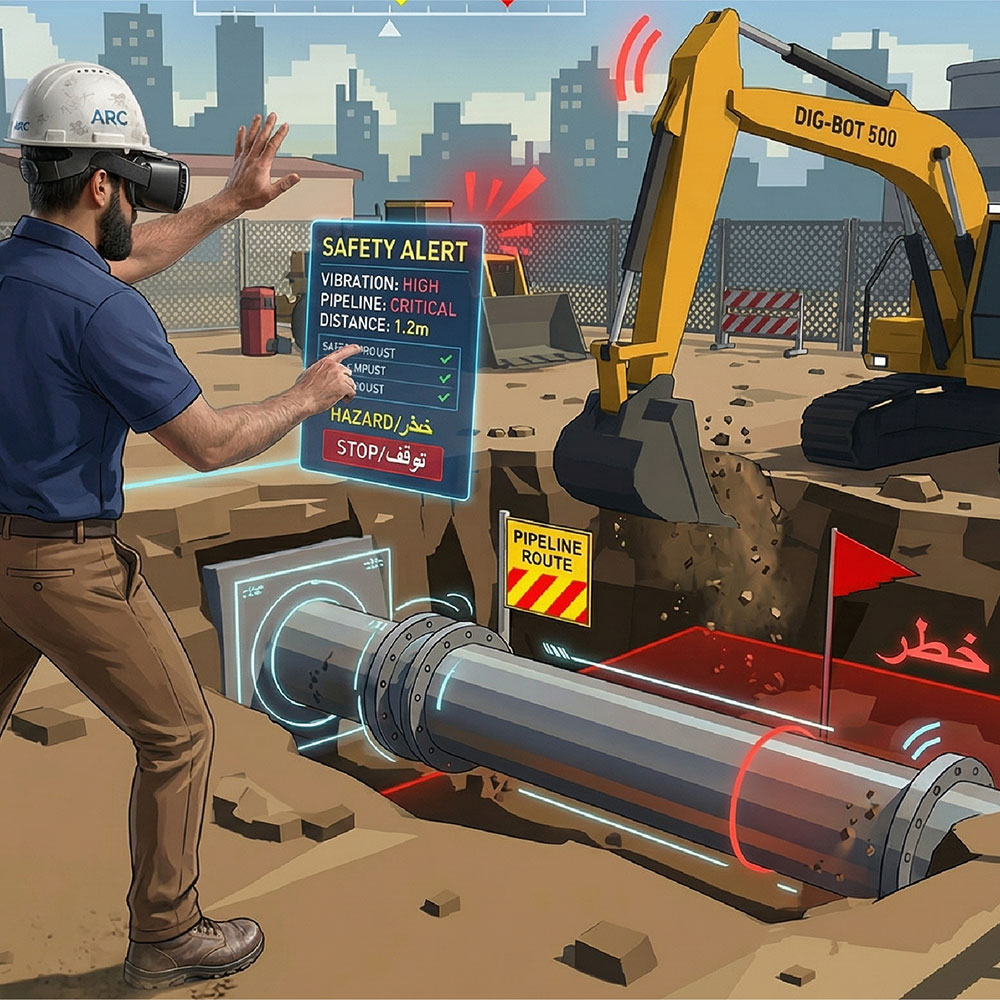
This module requires trainees to perform stand-by activities while an excavator performs excavation work near a critical (e.g., high-pressure, large-diameter, etc.) natural gas facility. The trainee must determine if power-operated excavation is permitted for use or if hand digging is required due to being within the tolerance zone of the locate markings and underground facilities. In addition, the trainee must be able to identify any Abnormal Operating Conditions (AOC’s) that may be encountered during the excavation work. These AOC’s may include improper backfill material, damaged or corroded piping, or gas piping that may be too shallow.
COURSE OBJECTIVES
Participants will learn how to master:
- Enforce Safe Tolerance Zones: Analyze physical locate paint markings and stake lines to calculate the mandatory tolerance zone where heavy machinery is legally prohibited.
- Audit Mechanical vs. Hand Digging: Determine exactly when an operator must shut down power-operated machinery and transition to manual hand-digging or soft-digging (vacuum excavation) methods.
- Identify Critical Pipeline AOCs: Instantly recognize and flag Abnormal Operating Conditions uncovered during excavation, including rock-heavy backfill, compromised pipe coating, atmospheric corrosion, or shallow-depth gas lines.
- Command Stop-Work Interventions: Demonstrate the authority to halt aggressive or un-permitted excavator movements before mechanical teeth strike buried infrastructure.
- Execute Compliance Documentation: Complete formal on-site field logs, document pipeline clearance depths, and report structural defects directly to central utility operations
WHO SHOULD JOIN?
This course is ideal for
- Natural gas utility workers
- Pipeline inspectors and technicians
- Excavation supervisors
- Construction site supervisors
- Utility locate personnel
- Field operations staff
- Pipeline maintenance crews
- Safety officers and HSE professionals
- Contractors working near underground utilities
- Infrastructure and public works personnel


COURSE METHODOLOGY
The course uses advanced VR technology to simulate real-world excavation operations near underground gas facilities.
Training includes
- Interactive excavation monitoring scenarios
- Pipeline protection simulations
- Tolerance zone decision-making exercises
- Hazard recognition training
- AOC identification assessments
- Realistic excavation safety challenges
- Scenario-based learning activities
- Performance evaluations with feedback
COURSE DURATION
5days
COURSE CERTIFICATES
Trainees who successfully maintain tolerance boundaries, transition crews to manual hand digging at the correct depth intervals, and catch all randomized pipeline AOCs will receive a formal Certificate of VR Pipeline Stand-by Activities and Damage Prevention Proficiency.
FAQS
What is Stand-by Activities Training?
Stand-by Activities Training teaches workers how to safely supervise excavation work near underground gas facilities and prevent accidental pipeline damage.
What are Abnormal Operating Conditions (AOCs)?
AOCs are unsafe conditions that may affect pipeline integrity or safety, such as corrosion, damaged piping, shallow gas lines, exposed facilities, or improper backfill materials.
Why is excavation monitoring important?
Excavation work near underground utilities can result in pipeline strikes, gas leaks, service disruptions, environmental damage, and serious injuries if not properly supervised.
What is a tolerance zone?
A tolerance zone is the designated area surrounding marked underground utilities where special precautions, including hand digging, may be required to prevent damage.
Will trainees learn when hand digging is required?
Yes. Participants learn how to determine whether power-operated equipment is allowed or if hand excavation methods must be used near underground facilities.
Is this training suitable for utility contractors?
Absolutely. The course is highly beneficial for contractors, excavators, utility crews, inspectors, and supervisors working around underground infrastructure.
How does VR improve excavation safety training?
VR creates realistic excavation scenarios that allow workers to practice hazard recognition and decision-making without exposing them to actual workplace risks.
Will participants receive a certificate?
Yes. Participants who successfully complete the course and assessment will receive a Stand-by Activities & Pipeline Protection Training Certificate.
Have questions about our training programs or need a customized corporate solution?