
COURSE OVERVIEW
Confidently onboard the next generation of gas field technicians
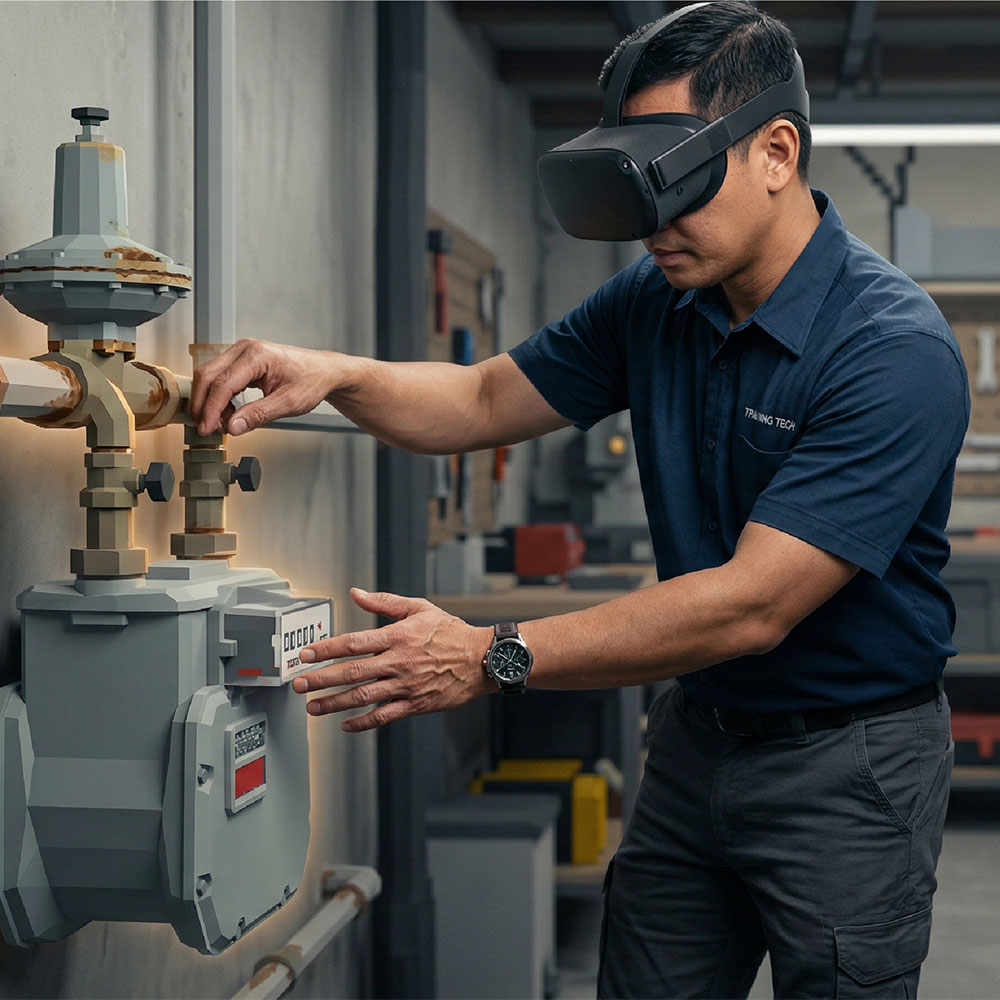
One of the first skills new field technicians in the natural gas industry learn is how to perform a gas meter safety inspection. Getting new hires up to speed is often a difficult and time-consuming process requiring a supervised ride-along. Inside Gas Meter Inspection was designed to shorten the time needed to learn this essential skill, providing trainees with risk-free, real-life experience in just a few hours.
COURSE OBJECTIVES
This course acts as an immersive practice ground and a rigorous compliance assessment for essential gas industry safety standards.
Participants will learn how to
- Identify Abnormal Operating Conditions (AOCs): Scan basement environments for hazardous clutter or structural issues that obstruct access or violate safety codes.
- Detect Electrical and Gas Threats: Safely operate a voltage pen to check for active electric currents on piping and use a CGI (Combustible Gas Indicator) tool to pinpoint and measure gas leaks.
- Spot System Tampering and Defects: Visually audit gas meters for heavy metal corrosion, missing seals, broken dials, uncertified pipe hangers, or illegal bypasses and magnets.
- Execute Compliance Documentation: Accurately match work orders, document active defects, and recommend official, legally compliant corrective actions.
WHO SHOULD JOIN?
- Newly hired gas field technicians and apprentice meter readers.
- Utility company onboarding cohorts and technical trainers.
- Quality assurance inspectors and field safety auditors.
- Pipeline maintenance crews and emergency response teams.
- Operations managers looking to slash onboarding times and eliminate field training liabilities.


COURSE METHODOLOGY
We utilize interactive, multi-user simulations built around actual field workflows
- The Pre-Inspection Check: Trainees start with compliance gatekeeping questions (such as Sunset Gold calibration requirements) before reviewing their digital work order.
- The Active Basement Simulation: Technicians interact with the homeowner to clear obstructions, run safety checks, trace lines with advanced tools, and troubleshoot randomized structural defects.
- The Review Room: Upon exiting the basement, trainees enter a digital debrief room. Here, they analyze their performance scorecards, review procedural errors, and instantly spin up a newly randomized scenario for rapid skill mastery.
COURSE DURATION
5days
COURSE CERTIFICATES
Trainees who successfully clear the pre-checks, identify all randomized system defects, and execute proper documentation will be awarded a Certificate of VR inside Gas Meter Inspection Proficiency.
FAQS
What happens in the simulation if a technician detects active voltage on a gas pipe?
This is a critical field safety test. If the trainee uses their voltage pen and detects a current, the simulation tests their compliance knowledge. The trainee must immediately log the hazard, halt the inspection, and exit the area. Proceeding with a hot line results in an immediate failure on their scorecard.
Who should attend this training?
This course is ideal for new and experienced gas utility technicians, safety inspectors, maintenance personnel, and utility company employees.
What skills are covered in the training?
Participants learn gas meter inspection procedures, leak detection, hazard recognition, voltage testing, equipment assessment, and safety documentation.
Are the VR scenarios realistic?
Yes, the training uses realistic domestic gas installation environments with randomized hazards and inspection challenges to simulate real-world field conditions.
What tools are used during the training?
Trainees practice using tools such as voltage pens, CGI gas leak detection equipment, and inspection instruments commonly used in gas utility operations.
Does the course include leak detection training?
Yes, participants learn how to safely test for gas leaks, measure gas levels, and identify hazardous conditions around gas systems.
How are trainees evaluated?
Participants are assessed on hazard recognition, inspection accuracy, proper tool usage, documentation, and compliance with safety procedures.
Is a certificate provided after completion?
Yes, participants who successfully complete the course will receive a certificate recognizing their competency in gas meter inspection and safety procedures.
Have questions about our training programs or need a customized corporate solution?